.jpg)
Saturday, November 8, 2008
President-Elect Obama's Victory Speech
Remarks of President-Elect Barack Obama-as prepared for delivery
Election Night
Tuesday, November 4th, 2008
Chicago, Illinois
If there is anyone out there who still doubts that America is a place where all things are possible; who still wonders if the dream of our founders is alive in our time; who still questions the power of our democracy, tonight is your answer.
It’s the answer told by lines that stretched around schools and churches in numbers this nation has never seen; by people who waited three hours and four hours, many for the very first time in their lives, because they believed that this time must be different; that their voice could be that difference.
It’s the answer spoken by young and old, rich and poor, Democrat and Republican, black, white, Latino, Asian, Native American, gay, straight, disabled and not disabled - Americans who sent a message to the world that we have never been a collection of Red States and Blue States: we are, and always will be, the United States of America.
It’s the answer that led those who have been told for so long by so many to be cynical, and fearful, and doubtful of what we can achieve to put their hands on the arc of history and bend it once more toward the hope of a better day.
It’s been a long time coming, but tonight, because of what we did on this day, in this election, at this defining moment, change has come to America.
I just received a very gracious call from Senator McCain. He fought long and hard in this campaign, and he’s fought even longer and harder for the country he loves. He has endured sacrifices for America that most of us cannot begin to imagine, and we are better off for the service rendered by this brave and selfless leader. I congratulate him and Governor Palin for all they have achieved, and I look forward to working with them to renew this nation’s promise in the months ahead.
I want to thank my partner in this journey, a man who campaigned from his heart and spoke for the men and women he grew up with on the streets of Scranton and rode with on that train home to Delaware, the Vice President-elect of the United States, Joe Biden.
I would not be standing here tonight without the unyielding support of my best friend for the last sixteen years, the rock of our family and the love of my life, our nation’s next First Lady, Michelle Obama. Sasha and Malia, I love you both so much, and you have earned the new puppy that’s coming with us to the White House. And while she’s no longer with us, I know my grandmother is watching, along with the family that made me who I am. I miss them tonight, and know that my debt to them is beyond measure.
To my campaign manager David Plouffe, my chief strategist David Axelrod, and the best campaign team ever assembled in the history of politics - you made this happen, and I am forever grateful for what you’ve sacrificed to get it done.
But above all, I will never forget who this victory truly belongs to - it belongs to you.
I was never the likeliest candidate for this office. We didn’t start with much money or many endorsements. Our campaign was not hatched in the halls of Washington - it began in the backyards of Des Moines and the living rooms of Concord and the front porches of Charleston.
It was built by working men and women who dug into what little savings they had to give five dollars and ten dollars and twenty dollars to this cause. It grew strength from the young people who rejected the myth of their generation’s apathy; who left their homes and their families for jobs that offered little pay and less sleep; from the not-so-young people who braved the bitter cold and scorching heat to knock on the doors of perfect strangers; from the millions of Americans who volunteered, and organized, and proved that more than two centuries later, a government of the people, by the people and for the people has not perished from this Earth. This is your victory.
I know you didn’t do this just to win an election and I know you didn’t do it for me. You did it because you understand the enormity of the task that lies ahead. For even as we celebrate tonight, we know the challenges that tomorrow will bring are the greatest of our lifetime - two wars, a planet in peril, the worst financial crisis in a century. Even as we stand here tonight, we know there are brave Americans waking up in the deserts of Iraq and the mountains of Afghanistan to risk their lives for us. There are mothers and fathers who will lie awake after their children fall asleep and wonder how they’ll make the mortgage, or pay their doctor’s bills, or save enough for college. There is new energy to harness and new jobs to be created; new schools to build and threats to meet and alliances to repair.
The road ahead will be long. Our climb will be steep. We may not get there in one year or even one term, but America - I have never been more hopeful than I am tonight that we will get there. I promise you - we as a people will get there.
There will be setbacks and false starts. There are many who won’t agree with every decision or policy I make as President, and we know that government can’t solve every problem. But I will always be honest with you about the challenges we face. I will listen to you, especially when we disagree. And above all, I will ask you join in the work of remaking this nation the only way it’s been done in America for two-hundred and twenty-one years - block by block, brick by brick, calloused hand by calloused hand.
What began twenty-one months ago in the depths of winter must not end on this autumn night. This victory alone is not the change we seek - it is only the chance for us to make that change. And that cannot happen if we go back to the way things were. It cannot happen without you.
So let us summon a new spirit of patriotism; of service and responsibility where each of us resolves to pitch in and work harder and look after not only ourselves, but each other. Let us remember that if this financial crisis taught us anything, it’s that we cannot have a thriving Wall Street while Main Street suffers - in this country, we rise or fall as one nation; as one people.
Let us resist the temptation to fall back on the same partisanship and pettiness and immaturity that has poisoned our politics for so long. Let us remember that it was a man from this state who first carried the banner of the Republican Party to the White House - a party founded on the values of self-reliance, individual liberty, and national unity. Those are values we all share, and while the Democratic Party has won a great victory tonight, we do so with a measure of humility and determination to heal the divides that have held back our progress. As Lincoln said to a nation far more divided than ours, “We are not enemies, but friends.though passion may have strained it must not break our bonds of affection.” And to those Americans whose support I have yet to earn - I may not have won your vote, but I hear your voices, I need your help, and I will be your President too.
And to all those watching tonight from beyond our shores, from parliaments and palaces to those who are huddled around radios in the forgotten corners of our world - our stories are singular, but our destiny is shared, and a new dawn of American leadership is at hand. To those who would tear this world down - we will defeat you. To those who seek peace and security - we support you. And to all those who have wondered if America’s beacon still burns as bright - tonight we proved once more that the true strength of our nation comes not from our the might of our arms or the scale of our wealth, but from the enduring power of our ideals: democracy, liberty, opportunity, and unyielding hope.
For that is the true genius of America - that America can change. Our union can be perfected. And what we have already achieved gives us hope for what we can and must achieve tomorrow.
This election had many firsts and many stories that will be told for generations. But one that’s on my mind tonight is about a woman who cast her ballot in Atlanta. She’s a lot like the millions of others who stood in line to make their voice heard in this election except for one thing - Ann Nixon Cooper is 106 years old.
She was born just a generation past slavery; a time when there were no cars on the road or planes in the sky; when someone like her couldn’t vote for two reasons - because she was a woman and because of the color of her skin.
And tonight, I think about all that she’s seen throughout her century in America - the heartache and the hope; the struggle and the progress; the times we were told that we can’t, and the people who pressed on with that American creed: Yes we can.
At a time when women’s voices were silenced and their hopes dismissed, she lived to see them stand up and speak out and reach for the ballot. Yes we can.
When there was despair in the dust bowl and depression across the land, she saw a nation conquer fear itself with a New Deal, new jobs and a new sense of common purpose. Yes we can.
When the bombs fell on our harbor and tyranny threatened the world, she was there to witness a generation rise to greatness and a democracy was saved. Yes we can.
She was there for the buses in Montgomery, the hoses in Birmingham, a bridge in Selma, and a preacher from Atlanta who told a people that “We Shall Overcome.” Yes we can.
A man touched down on the moon, a wall came down in Berlin, a world was connected by our own science and imagination. And this year, in this election, she touched her finger to a screen, and cast her vote, because after 106 years in America, through the best of times and the darkest of hours, she knows how America can change. Yes we can.
America, we have come so far. We have seen so much. But there is so much more to do. So tonight, let us ask ourselves - if our children should live to see the next century; if my daughters should be so lucky to live as long as Ann Nixon Cooper, what change will they see? What progress will we have made?
This is our chance to answer that call. This is our moment. This is our time - to put our people back to work and open doors of opportunity for our kids; to restore prosperity and promote the cause of peace; to reclaim the American Dream and reaffirm that fundamental truth - that out of many, we are one; that while we breathe, we hope, and where we are met with cynicism, and doubt, and those who tell us that we can’t, we will respond with that timeless creed that sums up the spirit of a people:
Yes We Can. Thank you, God bless you, and may God Bless the United States of America.


Saturday, October 25, 2008
Planting Flame Trees With Kanagawa Truckers Association
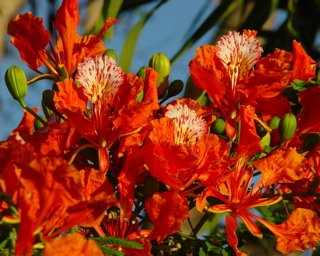
Our friends from Isa CNMI, led by Aya-san Matsumoto and Horiguchi-san, led some members of the Kanagawa Truckers Association of Japan to this afternoon's flame tree planting at American Memorial Park. Beautify CNMI's Cinta Kaipat, Angelo Villagomez, Gus Kaipat, and the Kaipat boys (Marvin, AJ, Jun, and Dusty) along with my other nephew Peter Angui, joined the group. Brad Doerr of MINA was also there and brought the flame trees that were planted.
The flame trees that Herminia Fuscho donated, which had been growing under the Ylang Ylang tree at my Mom's house were loaded into the Beautify CNMI! trailer that Gus and the boys hauled to American Memorial Park. The rest of the flame trees will be planted as soon as the Park staff decide the most appropriate places to plant them. Ranger Nancy is off island, so we got to meet Ranger Rianna (I hope I spelled her name right). I was going to shake her hand when I introduced myself, until I saw how muddy her hand was (you'll see it in the slideshow), so...never mind. :) Anyway, thank you, good folks at American Memorial Park and Park Rangers Nancy and Rianna!
The Kanagawa Group makes a living driving trucks. It is remarkable and commendable that they came to Saipan to plant trees to do their part to help reduce the carbon footprint we humans have left on Earth. Thank you SO much! Arigato gozaimasu!
The X Chromosome Panel
Local
Saturday, October 25, 2008
Panelists: Women need to continue to seek equality
By Kristi Eaton
Reporter
 Laura Manglona speaks at the X Chromosome: Gender Equality in the CNMI forum Thursday night. Sen. Maria Pangelinan, Cinta Kaipat and Frances Sablan are in the background. (Kristi Eaton)
 Gender inequality is improving but it continues to be an issue, a panel of highly regarded women from the CNMI and Guam said Thursday night.
 (L-R) Laura Manglona; Senator Maria Frica Pangelinan; Cinta Kaipat; Moderator Frances Sablan; Rebecca Warfield; Guam House Speaker Judith Won Pat; and Kimberlyn King-Hinds
“Is gender a moot point?” asked Sen. Maria Pangelinan, one of the panelists. “No, as long as we have the human race made up of males and females, gender will still matter.”
The other panelists at The X Chromosome: Gender Equality in the CNMI were: Cinta Kaipat, deputy secretary for the Department of Labor; Kimberlyn King-Hinds, general manager of Tinian Ice and Water Co. and member of the Public Utilities Commission; Laura Manglona, a former educator from Rota; Rebecca Warfield, assistant attorney general for the CNMI, and Judith Won Pat, Guam's Legislative Speaker. Frances Sablan was the moderator of the event, sponsored by the NMI Council for the Humanities as part of its We the People Project and organized by Taro Leaf Inc. More than 50 men and women were in attendance.
As a woman, Pangelinan said, she can pull from experiences different than her male counterparts.
“We have a different setup, our experiences are different, our set of eyes are different,” she said before the forum began. “Running a house is like running a Legislature.”
Society dictates a woman to act a certain way, Kaipat said, but females should not be afraid to stand up for themselves, including seeking equal pay.
“We have not achieved equality,” she said. “Absolutely not. Look around you. There is no way we're achieved equality. Ladies, we have along way to go. We need to march along.”
When it comes to pay, Warfield said one thing she has learned is that men can count.
“If I'm saving you money, you will pay me so I will not disappear,” she said. “As long as you have the ability to make yourself necessary, you can demand to make yourself count.”
Won Pat, who was one of the first women in Guam's Senate, said legislation was passed in Guam requiring an equal number of men and women on boards and commissions. “But because governors are male, that isn't the case,” she added. Out of 25 boards, only eight have equal representation, she said. But females do hold several powerful positions in Guam. A woman leads the Office of Public Auditor, the Attorney General is female and there is a woman federal judge, she added.
Won Pat said growing up she sometimes received conflicting messages from her family about her gender role. Her father often told her education was important, but women are expected to be the homemaker, telling her, “You have to get an education. You have to be able to compete in this world. If something happens to your husband you have to be the bread winner.”
It is important that women are not their own worst enemy, Won Pat said.
“When one is elevated, it should be an example, but sometimes there is jealousy,” she said.
Kaipat said women should aspire to hold positions that in the past have been dominated by men, like engineers or architects.
“Men think those are just for men,” she said. “Women are just as qualified as men to hold those.” (L-R): Vice President of Tinian Ice Kimberly King-Hinds; Deputy Labor Secretary Cinta M. Kaipat; Senator Maria Frica Pangelinan; Former CUC Board member Laura Manglona; Guam House Speaker Judith Won Pat; Moderator Frances Sablan; Humanities Council Chair Dr. Debra Cabrera; and former DPS Commissioner and current Assistant Attorney General Rebecca Warfield
 Thanks to my Ace photographer for the evening -- Auntie Chailang Palacios, aka Acha Baby!
Saturday, October 25, 2008
Panelists: Women need to continue to seek equality
By Kristi Eaton
Reporter
 Laura Manglona speaks at the X Chromosome: Gender Equality in the CNMI forum Thursday night. Sen. Maria Pangelinan, Cinta Kaipat and Frances Sablan are in the background. (Kristi Eaton)
 Gender inequality is improving but it continues to be an issue, a panel of highly regarded women from the CNMI and Guam said Thursday night.
 (L-R) Laura Manglona; Senator Maria Frica Pangelinan; Cinta Kaipat; Moderator Frances Sablan; Rebecca Warfield; Guam House Speaker Judith Won Pat; and Kimberlyn King-Hinds
“Is gender a moot point?” asked Sen. Maria Pangelinan, one of the panelists. “No, as long as we have the human race made up of males and females, gender will still matter.”
The other panelists at The X Chromosome: Gender Equality in the CNMI were: Cinta Kaipat, deputy secretary for the Department of Labor; Kimberlyn King-Hinds, general manager of Tinian Ice and Water Co. and member of the Public Utilities Commission; Laura Manglona, a former educator from Rota; Rebecca Warfield, assistant attorney general for the CNMI, and Judith Won Pat, Guam's Legislative Speaker.
 Frances Sablan was the moderator of the event, sponsored by the NMI Council for the Humanities as part of its We the People Project and organized by Taro Leaf Inc. More than 50 men and women were in attendance.
As a woman, Pangelinan said, she can pull from experiences different than her male counterparts.
“We have a different setup, our experiences are different, our set of eyes are different,” she said before the forum began. “Running a house is like running a Legislature.”

Society dictates a woman to act a certain way, Kaipat said, but females should not be afraid to stand up for themselves, including seeking equal pay.
“We have not achieved equality,” she said. “Absolutely not. Look around you. There is no way we're achieved equality. Ladies, we have along way to go. We need to march along.”
When it comes to pay, Warfield said one thing she has learned is that men can count.

“If I'm saving you money, you will pay me so I will not disappear,” she said. “As long as you have the ability to make yourself necessary, you can demand to make yourself count.”
Won Pat, who was one of the first women in Guam's Senate, said legislation was passed in Guam requiring an equal number of men and women on boards and commissions.
 “But because governors are male, that isn't the case,” she added. Out of 25 boards, only eight have equal representation, she said. But females do hold several powerful positions in Guam. A woman leads the Office of Public Auditor, the Attorney General is female and there is a woman federal judge, she added.
Won Pat said growing up she sometimes received conflicting messages from her family about her gender role. Her father often told her education was important, but women are expected to be the homemaker, telling her, “You have to get an education. You have to be able to compete in this world. If something happens to your husband you have to be the bread winner.”
It is important that women are not their own worst enemy, Won Pat said.
“When one is elevated, it should be an example, but sometimes there is jealousy,” she said.
Kaipat said women should aspire to hold positions that in the past have been dominated by men, like engineers or architects.
“Men think those are just for men,” she said. “Women are just as qualified as men to hold those.”
 (L-R): Vice President of Tinian Ice Kimberly King-Hinds; Deputy Labor Secretary Cinta M. Kaipat; Senator Maria Frica Pangelinan; Former CUC Board member Laura Manglona; Guam House Speaker Judith Won Pat; Moderator Frances Sablan; Humanities Council Chair Dr. Debra Cabrera; and former DPS Commissioner and current Assistant Attorney General Rebecca Warfield
 Thanks to my Ace photographer for the evening -- Auntie Chailang Palacios, aka Acha Baby!
Open Letter To President Bush
October 25, 2008
President George W. Bush
The White House
1600 Pennsylvania Avenue NW
Washington, DC 20500
Dear President Bush:
The Friends of the Monument was formed in the spring of 2008 to express the voice of the local community and consists of a cross-section of indigenous and resident people of the CNMI who are dedicated to the conservation, preservation and protection of marine flora, fauna and geological features of the oceans; and the creation and proper management of a Marianas Trench Marine National Monument.
We, the Friends of the Marinas Trench Marine Monument, thank you and support your interest in declaring the marine ecosystems surrounding the three northernmost islands of Uracus, Maug, and Asuncion as a marine national monument, in accordance with the Antiquities Act of 1906. Declaring the waters as a monument under the Act would expedite the process of bringing protection to the precious resources found in the waters there, while establishing specific federal responsibilities toward governance of the monument, and enhancing our ocean legacy.
Additionally, we ask that you specifically include in the language of the Executive Order under the Antiquities Act that the National Oceanic and Atmospheric Administration, through its National Marine Sanctuaries Program, be the federal agency that administers, co-manages, and enforces the monument, along with the CNMI.
Furthermore, any co-management agreement must anticipate unknowns and allow for responsible change. The management arrangement, goals, and objectives of the monument should be reviewed on a regular 10-year basis.
The health of the world's oceans has declined drastically over the past several hundred years, and we believe the most effective means of restoring their wellbeing is through the setting aside of large no-take zones or sanctuaries, such as the Marianas Trench Marine National Monument. This would offer marine life a safe haven.
We believe that the creation of a monument in our northern waters would generate many benefits for the CNMI. The monument will enhance the stature of the CNMI on the world stage as a contributor toward the revitalization of the world's oceans, and as a contributor to the Micronesia Challenge to set aside and effectively conserve 30 percent of the region's near-shore resources by 2020. The monument would also provide countless benefits to the people of the CNMI.
We have taken the liberty of spelling out a number of the benefits, in the form of a vision that we believe would accrue from the monument. These fall into six categories: management and enforcement, culture and tradition, conservation, education, research, and economic development, which we address, in turn, below.
Management and Enforcement, by which we mean not only management of the monument once it is declared, but also the process of defining how the monument would function once it is established.
The Friends envision that the federal and local government officials will co-manage the monument. We would like the Friends to be involve in this co-management; we are sure that there are innovative means for our members' support and contribution. For example, we hope that the initial Advisory Committee for the Monument includes members of the Friends and other conservation-minded people who actively supported the creation of the monument.
Additionally, critical to see these efforts are the necessary resources to enforce any protections established by a special designations. With this regard, we would request your assistance with the necessary equipment, training and support to properly enforce the designated area. We envision having planes and boats for enforcement and patrol. In order to better manage and enforce the protections of the monument, we suggest that all vessels entering the monument area should be required to carry a VMS tracking system and adopt strict invasive marine and terrestrial species prevention measures.
Culture and Tradition, by which we mean the lifestyle, practices and beliefs of the Chamorro and Carolinian peoples that have been handed down from generation to generation.
The Friends believe, first of all, that the Chamorro and Carolinian cultures and tradition must be treated with respect, and taken into full account in decisions that are made about the management and use of the monument. We should take into consideration the precepts of our indigenous culture and tradition when deciding issues like, for example, sustenance fishing, canoe travel and other similar matters.
Conservation, by which we mean the protection and preservation of the marine ecosystems and their interrelationship with land ecosystems; and their continued presence and existence in the future.
The proposed monument contains some of the world's most unique habitats and unusual features, such as chemosynthetic and photosynthetic organisms living side-by-side, mud volcanoes, vent communities and other natural wonders. One of these is volcanic coral reefs, which occur nowhere else in Micronesia. The coral reefs that exist there are flourishing and vibrant, and need protection to help guard our planet from the threat of global warming and potentially act as a source of corals for other marine areas.
The Friends acknowledge that people of the CNMI and the world have historically relied on the oceans for food and other resources. We believe that the need for continued availability of our precious, limited marine resources does not conflict with conservation. We believe that creating the monument will help increase the oceans' abundance by contributing to the survival and recovery of depleted marine resources and biodiversity.
Education, by which we mean both formal and informal education, for students as well as the public, for residents as well as the rest of the world, in all relevant media formats, produced both commercially and non-commercially.
The Friends believe that funding should be made available to enable oceanography to be taught in schools, at the college and through lectures and programs for the public, and to ensure that pertinent education materials will be readily available, that careers in the marine and geological science will be encouraged, that opportunities for field trips for students, teachers, the general public and tourist should be made available.
We envision a Visitors' Center, including a centrally-located facility funded under the auspices of the NOAA National Marine Sanctuaries Program that would be open to everyone that would contain not only displays of various sorts, but would also offer related items for sale.
The Friends believe that the Visitors' Center would bring benefits not only to the local economy by attracting tourist, but to the people of the CNMI as it would showcase information about marine geology in general, about the monument in particular, about the CNMI, and about its indigenous history and culture to all who visit it; it would present, in a variety of formats, the results of marine research done in the area and relevant research done elsewhere; it would regularly present programs open to the public on matters related to marine life in general as well as marine life specific to the area, thus allowing the people of the CNMI, tourists, and other visitors to benefit from the establishment of the monument.
It is our dream that this monument will inspire and contribute to the first indigenous students receiving their Ph.D. in marine biology, deep-sea geology, or other related sciences.
Research, by which we mean the process of studying marine life, geology and other sciences, and of data generation, as well as the products of such activity generated by scientists, teachers, or students.
The Friends believe the researchers and scientists who base their work on the marine monument and its environs should be asked to obtain permission prior to undertaking research in the area and should share the information they garner with the local community through presentations at the Visitors' Center or in other forms and forums. They should make accommodations to take along local students and teachers on research trips, so that local students are encouraged to become scientist and researchers.
Economic Development, by which we mean assistance in improving the economy toward enabling the CNMI to become self-sufficient. The CNMI, being a small island with limited assets, will always be dependent to some extent on outside forces and influences, but certainly more is needed and can be done to increase independence.
There are many great economic benefits that we anticipate from the monument. We envision a surge in the media attention from your designation of the Marianas Trench Marine National Monument, which will attract more visitors to the CNMI. The CNMI relies heavily on tourism as its number one industry, and help to this sector of economy-whether from traditional or high-end visitors-will have a significant beneficial impact. The monument will likely attract scientists and other researchers, who will contribute financially while visiting or living here. The operation of the Visitors' Center and administration of the monument will create jobs, both directly and indirectly.
The contribution that a monument would make to the CNMI economy is in stark contrast to the present situation, where the only economic benefit that presently occurs from this significant resource is limited to illegal foreign fishing activities, such as shark finning. Obviously, this current economic activity has little benefit to the CNMI.
The Friends believe that the anticipated economic activities from the monument are much more suited to the CNMI's image in the world and more productive of tangible benefits. The increased flow of traffic from Saipan, Tinian, and Rota to the monument would also benefit the people of the CNMI in that it would make more feasible resettlement of the Northern Islands and provide transportation and communication with the “lower” Northern Islands.
We envision the northern island of Pagan being used as a staging area for research, fuel storage facility, and other needs. Of particular benefit would be the expansion of the landing strip for easier and faster access. The provision of the floating dock could preserve its unique black and beach.
Greater protection of our monument resources from illegal fishing, exploitation, or harvesting will also help our fishermen who follow the law to stay competitive.
In conclusion, the Friends of the Marianas Trench Marine National Monument hope that you make the designation of this monument soon and expressly give it the highest possible protections available by law.
Ignacio V. Cabrera
Chair, Friends of the Monument
Agnes McPhetres
Vice Chair, Friends of the Monument
Andrew Salas
Vice Chair, Friends of the Monument
Belinda Norita
MarjaLee Taitano
Ken Kramer
Chailang Palacios
Karl T. Reyes
Jane Mack
Cinta M. Kaipat
Emelain D. Fejeran
Wes Bogdan
Lynn Knight
David M. Sablan
Ruth L. Tighe
President George W. Bush
The White House
1600 Pennsylvania Avenue NW
Washington, DC 20500
Dear President Bush:
The Friends of the Monument was formed in the spring of 2008 to express the voice of the local community and consists of a cross-section of indigenous and resident people of the CNMI who are dedicated to the conservation, preservation and protection of marine flora, fauna and geological features of the oceans; and the creation and proper management of a Marianas Trench Marine National Monument.
We, the Friends of the Marinas Trench Marine Monument, thank you and support your interest in declaring the marine ecosystems surrounding the three northernmost islands of Uracus, Maug, and Asuncion as a marine national monument, in accordance with the Antiquities Act of 1906. Declaring the waters as a monument under the Act would expedite the process of bringing protection to the precious resources found in the waters there, while establishing specific federal responsibilities toward governance of the monument, and enhancing our ocean legacy.
Additionally, we ask that you specifically include in the language of the Executive Order under the Antiquities Act that the National Oceanic and Atmospheric Administration, through its National Marine Sanctuaries Program, be the federal agency that administers, co-manages, and enforces the monument, along with the CNMI.
Furthermore, any co-management agreement must anticipate unknowns and allow for responsible change. The management arrangement, goals, and objectives of the monument should be reviewed on a regular 10-year basis.
The health of the world's oceans has declined drastically over the past several hundred years, and we believe the most effective means of restoring their wellbeing is through the setting aside of large no-take zones or sanctuaries, such as the Marianas Trench Marine National Monument. This would offer marine life a safe haven.
We believe that the creation of a monument in our northern waters would generate many benefits for the CNMI. The monument will enhance the stature of the CNMI on the world stage as a contributor toward the revitalization of the world's oceans, and as a contributor to the Micronesia Challenge to set aside and effectively conserve 30 percent of the region's near-shore resources by 2020. The monument would also provide countless benefits to the people of the CNMI.
We have taken the liberty of spelling out a number of the benefits, in the form of a vision that we believe would accrue from the monument. These fall into six categories: management and enforcement, culture and tradition, conservation, education, research, and economic development, which we address, in turn, below.
Management and Enforcement, by which we mean not only management of the monument once it is declared, but also the process of defining how the monument would function once it is established.
The Friends envision that the federal and local government officials will co-manage the monument. We would like the Friends to be involve in this co-management; we are sure that there are innovative means for our members' support and contribution. For example, we hope that the initial Advisory Committee for the Monument includes members of the Friends and other conservation-minded people who actively supported the creation of the monument.
Additionally, critical to see these efforts are the necessary resources to enforce any protections established by a special designations. With this regard, we would request your assistance with the necessary equipment, training and support to properly enforce the designated area. We envision having planes and boats for enforcement and patrol. In order to better manage and enforce the protections of the monument, we suggest that all vessels entering the monument area should be required to carry a VMS tracking system and adopt strict invasive marine and terrestrial species prevention measures.
Culture and Tradition, by which we mean the lifestyle, practices and beliefs of the Chamorro and Carolinian peoples that have been handed down from generation to generation.
The Friends believe, first of all, that the Chamorro and Carolinian cultures and tradition must be treated with respect, and taken into full account in decisions that are made about the management and use of the monument. We should take into consideration the precepts of our indigenous culture and tradition when deciding issues like, for example, sustenance fishing, canoe travel and other similar matters.
Conservation, by which we mean the protection and preservation of the marine ecosystems and their interrelationship with land ecosystems; and their continued presence and existence in the future.
The proposed monument contains some of the world's most unique habitats and unusual features, such as chemosynthetic and photosynthetic organisms living side-by-side, mud volcanoes, vent communities and other natural wonders. One of these is volcanic coral reefs, which occur nowhere else in Micronesia. The coral reefs that exist there are flourishing and vibrant, and need protection to help guard our planet from the threat of global warming and potentially act as a source of corals for other marine areas.
The Friends acknowledge that people of the CNMI and the world have historically relied on the oceans for food and other resources. We believe that the need for continued availability of our precious, limited marine resources does not conflict with conservation. We believe that creating the monument will help increase the oceans' abundance by contributing to the survival and recovery of depleted marine resources and biodiversity.
Education, by which we mean both formal and informal education, for students as well as the public, for residents as well as the rest of the world, in all relevant media formats, produced both commercially and non-commercially.
The Friends believe that funding should be made available to enable oceanography to be taught in schools, at the college and through lectures and programs for the public, and to ensure that pertinent education materials will be readily available, that careers in the marine and geological science will be encouraged, that opportunities for field trips for students, teachers, the general public and tourist should be made available.
We envision a Visitors' Center, including a centrally-located facility funded under the auspices of the NOAA National Marine Sanctuaries Program that would be open to everyone that would contain not only displays of various sorts, but would also offer related items for sale.
The Friends believe that the Visitors' Center would bring benefits not only to the local economy by attracting tourist, but to the people of the CNMI as it would showcase information about marine geology in general, about the monument in particular, about the CNMI, and about its indigenous history and culture to all who visit it; it would present, in a variety of formats, the results of marine research done in the area and relevant research done elsewhere; it would regularly present programs open to the public on matters related to marine life in general as well as marine life specific to the area, thus allowing the people of the CNMI, tourists, and other visitors to benefit from the establishment of the monument.
It is our dream that this monument will inspire and contribute to the first indigenous students receiving their Ph.D. in marine biology, deep-sea geology, or other related sciences.
Research, by which we mean the process of studying marine life, geology and other sciences, and of data generation, as well as the products of such activity generated by scientists, teachers, or students.
The Friends believe the researchers and scientists who base their work on the marine monument and its environs should be asked to obtain permission prior to undertaking research in the area and should share the information they garner with the local community through presentations at the Visitors' Center or in other forms and forums. They should make accommodations to take along local students and teachers on research trips, so that local students are encouraged to become scientist and researchers.
Economic Development, by which we mean assistance in improving the economy toward enabling the CNMI to become self-sufficient. The CNMI, being a small island with limited assets, will always be dependent to some extent on outside forces and influences, but certainly more is needed and can be done to increase independence.
There are many great economic benefits that we anticipate from the monument. We envision a surge in the media attention from your designation of the Marianas Trench Marine National Monument, which will attract more visitors to the CNMI. The CNMI relies heavily on tourism as its number one industry, and help to this sector of economy-whether from traditional or high-end visitors-will have a significant beneficial impact. The monument will likely attract scientists and other researchers, who will contribute financially while visiting or living here. The operation of the Visitors' Center and administration of the monument will create jobs, both directly and indirectly.
The contribution that a monument would make to the CNMI economy is in stark contrast to the present situation, where the only economic benefit that presently occurs from this significant resource is limited to illegal foreign fishing activities, such as shark finning. Obviously, this current economic activity has little benefit to the CNMI.
The Friends believe that the anticipated economic activities from the monument are much more suited to the CNMI's image in the world and more productive of tangible benefits. The increased flow of traffic from Saipan, Tinian, and Rota to the monument would also benefit the people of the CNMI in that it would make more feasible resettlement of the Northern Islands and provide transportation and communication with the “lower” Northern Islands.
We envision the northern island of Pagan being used as a staging area for research, fuel storage facility, and other needs. Of particular benefit would be the expansion of the landing strip for easier and faster access. The provision of the floating dock could preserve its unique black and beach.
Greater protection of our monument resources from illegal fishing, exploitation, or harvesting will also help our fishermen who follow the law to stay competitive.
In conclusion, the Friends of the Marianas Trench Marine National Monument hope that you make the designation of this monument soon and expressly give it the highest possible protections available by law.
Ignacio V. Cabrera
Chair, Friends of the Monument
Agnes McPhetres
Vice Chair, Friends of the Monument
Andrew Salas
Vice Chair, Friends of the Monument
Belinda Norita
MarjaLee Taitano
Ken Kramer
Chailang Palacios
Karl T. Reyes
Jane Mack
Cinta M. Kaipat
Emelain D. Fejeran
Wes Bogdan
Lynn Knight
David M. Sablan
Ruth L. Tighe
Thursday, October 23, 2008
Thursday, October 23, 2008
Local
Wednesday, October 22, 2008
At forum, public speaks out on NMI monument
By Stefan Sebastian
Business Editor
Members of the public both for and against the White House's plan to establish a marine monument in the CNMI gave federal authorities feedback during a public forum at the Fiesta Resort Monday night. (Stefan Sebastian) A sea of people, some sporting orange t-shirts and others holding protest signs, filled a conference room at the Fiesta Resort and Spa Monday night for a forum on the White House's proposal to declare the waters around the CNMI's three northernmost islands as a marine monument.
The proposal-which would place thousands of square miles of ocean water around the islands of Maug, Asuncion and Uracas under heightened federal protections-has become one of the most hotly contested local issues of the day, with supporters saying it will preserve a unique haven for undersea life and opponents arguing it will trample on the rights of people in the CNMI.
Diving into the fray this week are officials from the White House Council on Environmental Quality, who earlier on Monday held a four-hour talk with the local Legislature and private discussions with Gov. Benigno Fitial. In Monday night's forum, the White House team did far more listening than talking as members of the public both for and against the monument gave them a piece of their minds.
Throughout much of the forum, the public participants engaged in discussion groups to answer a host of questions about the proposal on topics such as, among others, what resources should be considered in the White House's assessment of the waters at issue and how to structure a co-management scheme for the region.
Among the key concerns raised by the discussion groups were whether the federal government could guarantee funding linked to the monument, whether indigenous people would continue to have access to the northern islands if the plan moves forward, and the Bush administration's timeline for making a decision-which some critics have said is rushed given the president's pending departure from the White House in January. For his part, CEQ chief James Connaughton appeared ready to try to calm the nerves of many in the crowd who came with apprehensions about the plan.
“This is an opportunity to put the Northern Marianas on the international map,” he told them. “But it's an opportunity that the people of the Marianas have to want.”
A crucial reservation many opponents of the proposal have long voiced is that it will limit or bar access in the future to undersea mineral deposits in the region and geothermal energy resources. However, in an interview, Connaughton said that preliminary scientific data on the plan suggests that the undersea geological resources within the proposed monument's boundaries are uniquely arranged so that they could potentially be extracted without harming the surrounding ecosystem, a point the White House is considering as it weighs how to manage the waters.
“There does not appear to be a conflict between the biological resources there and the other natural resources,” he said. “This region is blessed with having all of these resources but not in conflict with one another, so all of the different interests could be met.”
On the amount of access indigenous people would have in the monument, Connaughton added that “freedom of navigation” would be assured under the plan if it moves ahead and noted that when the federal government established a similar monument in Hawaii several years ago, it made significant accommodations for native people.
“You as a culture are already there on conservation,” he said to one member of the crowd who had raised the issue. “What this could do is reflect that.”
Some critics of the monument proposal at the forum, however, remained skeptical after Connaughton's assurances. Rep. Ramon Tebuteb (R-Saipan) said the short period of time available in the twilight of President Bush's final term might be too little for the local community to come to grips with the issue and make a decision.
“Now we have a two-month grace period before the president leaves,” said Tebuteb. “Is that enough time for everybody to understand the pros and cons of this situation?”
And rather than declare the northern waters a monument, commercial fisherman David Lewis suggested the area should instead become a federal marine sanctuary, a designation he said would give more flexibility to his industry and others when it comes to the economic activities federal regulations would allow to take place there.
“I just think that the people here need to consider what they would be giving up,” he said. “In order for anything to change once you create a monument, it would require an act of Congress.”
Nevertheless, proponents of the monument pointed to a slew of prospective benefits the proposal might bring to the CNMI, such as an increase in tourism and new opportunities for federal funding. Deputy Labor Secretary Jacinta Kaipat, for example, who was raised on the island of Pagan near the monument's waters, said the plan could open up opportunities for indigenous people to resettle some of the northern islands with federal aid.
Kaipat added that the plan could give the CNMI's public image a boost.
“Let's get some good press for a change,” she said.
Restaurateur and former congressman Andrew Salas noted the monument could also help to heal the CNMI's relationship with the federal government after heated controversies over minimum wage and immigration laws.
“This is the beginning of repairing that relationship,” he said. “I hope that based on this, we can begin to develop some trust.”
But for Connaughton, a major incentive in establishing a monument in the CNMI is the rare and untouched coral reef ecosystem that it would contain, one that could give the world a bright example when it comes to how to manage reefs around the globe.
“This is not about t-shirts and signs,” he said, noting later that the diversity of life in the monument is richer than almost any other place on Earth. “This is the world's control for what a truly pristine coral community is supposed to look like. It has much to teach the rest of the world, so we have to do this right.”
Local
Wednesday, October 22, 2008
At forum, public speaks out on NMI monument
By Stefan Sebastian
Business Editor
Members of the public both for and against the White House's plan to establish a marine monument in the CNMI gave federal authorities feedback during a public forum at the Fiesta Resort Monday night. (Stefan Sebastian) A sea of people, some sporting orange t-shirts and others holding protest signs, filled a conference room at the Fiesta Resort and Spa Monday night for a forum on the White House's proposal to declare the waters around the CNMI's three northernmost islands as a marine monument.
The proposal-which would place thousands of square miles of ocean water around the islands of Maug, Asuncion and Uracas under heightened federal protections-has become one of the most hotly contested local issues of the day, with supporters saying it will preserve a unique haven for undersea life and opponents arguing it will trample on the rights of people in the CNMI.
Diving into the fray this week are officials from the White House Council on Environmental Quality, who earlier on Monday held a four-hour talk with the local Legislature and private discussions with Gov. Benigno Fitial. In Monday night's forum, the White House team did far more listening than talking as members of the public both for and against the monument gave them a piece of their minds.
Throughout much of the forum, the public participants engaged in discussion groups to answer a host of questions about the proposal on topics such as, among others, what resources should be considered in the White House's assessment of the waters at issue and how to structure a co-management scheme for the region.
Among the key concerns raised by the discussion groups were whether the federal government could guarantee funding linked to the monument, whether indigenous people would continue to have access to the northern islands if the plan moves forward, and the Bush administration's timeline for making a decision-which some critics have said is rushed given the president's pending departure from the White House in January. For his part, CEQ chief James Connaughton appeared ready to try to calm the nerves of many in the crowd who came with apprehensions about the plan.
“This is an opportunity to put the Northern Marianas on the international map,” he told them. “But it's an opportunity that the people of the Marianas have to want.”
A crucial reservation many opponents of the proposal have long voiced is that it will limit or bar access in the future to undersea mineral deposits in the region and geothermal energy resources. However, in an interview, Connaughton said that preliminary scientific data on the plan suggests that the undersea geological resources within the proposed monument's boundaries are uniquely arranged so that they could potentially be extracted without harming the surrounding ecosystem, a point the White House is considering as it weighs how to manage the waters.
“There does not appear to be a conflict between the biological resources there and the other natural resources,” he said. “This region is blessed with having all of these resources but not in conflict with one another, so all of the different interests could be met.”
On the amount of access indigenous people would have in the monument, Connaughton added that “freedom of navigation” would be assured under the plan if it moves ahead and noted that when the federal government established a similar monument in Hawaii several years ago, it made significant accommodations for native people.
“You as a culture are already there on conservation,” he said to one member of the crowd who had raised the issue. “What this could do is reflect that.”
Some critics of the monument proposal at the forum, however, remained skeptical after Connaughton's assurances. Rep. Ramon Tebuteb (R-Saipan) said the short period of time available in the twilight of President Bush's final term might be too little for the local community to come to grips with the issue and make a decision.
“Now we have a two-month grace period before the president leaves,” said Tebuteb. “Is that enough time for everybody to understand the pros and cons of this situation?”
And rather than declare the northern waters a monument, commercial fisherman David Lewis suggested the area should instead become a federal marine sanctuary, a designation he said would give more flexibility to his industry and others when it comes to the economic activities federal regulations would allow to take place there.
“I just think that the people here need to consider what they would be giving up,” he said. “In order for anything to change once you create a monument, it would require an act of Congress.”
Nevertheless, proponents of the monument pointed to a slew of prospective benefits the proposal might bring to the CNMI, such as an increase in tourism and new opportunities for federal funding. Deputy Labor Secretary Jacinta Kaipat, for example, who was raised on the island of Pagan near the monument's waters, said the plan could open up opportunities for indigenous people to resettle some of the northern islands with federal aid.
Kaipat added that the plan could give the CNMI's public image a boost.
“Let's get some good press for a change,” she said.
Restaurateur and former congressman Andrew Salas noted the monument could also help to heal the CNMI's relationship with the federal government after heated controversies over minimum wage and immigration laws.
“This is the beginning of repairing that relationship,” he said. “I hope that based on this, we can begin to develop some trust.”
But for Connaughton, a major incentive in establishing a monument in the CNMI is the rare and untouched coral reef ecosystem that it would contain, one that could give the world a bright example when it comes to how to manage reefs around the globe.
“This is not about t-shirts and signs,” he said, noting later that the diversity of life in the monument is richer than almost any other place on Earth. “This is the world's control for what a truly pristine coral community is supposed to look like. It has much to teach the rest of the world, so we have to do this right.”
Monday, October 20, 2008
120 on 10/20 IS TODAY!!!!

Caption: Cinta Kaipat places a mwaar on the head of CEQ chairman James Connaughton while 65 other Friends of the Monument members look on. Inset, James Connaughton greets the line of Monument supporters at the entrance to the Hyatt Regency Saipan yesterday afternoon. (Contributed Photos)
Don't forget to wear your Orange t-shirts and come on out to the Hibiscus Hall, Fiesta Resort, for the 5:30 p.m. workshop meeting today! Your presence matters!
Angelo has a great post and pictures of the warm welcome reception we gave the White House officials who arrived at the Hyatt yesterday. Visit The Saipan Blog - Saipan, CNMI's most popular blog since ever since
http://www.thesaipanblogger.com
While you're at it, visit the other blogs that Angelo contributes to --
--
Angelo O'Connor Villagomez
Saipan Coordinator - Ocean Legacy
PMB 360 BOX 10001
Saipan, MP 96950
(670) 234 2665
http://www.globaloceanlegacy.org
Volunteer
Beautify CNMI
(670) 285-6462
http://www.beautifycnmi.com
Monday, October 13, 2008
120 ON 10/20
Monday, October 13, 2008
120 on 10/20
By CINTA M. KAIPAT
Special to the Saipan Tribune
Two years ago, the people living in the Commonwealth of the Northern Mariana Islands set out to do something extraordinary. Members of the Beautify CNMI! coalition challenged themselves to recruit 1,020 volunteers to clean up our island on Oct. 20, 2006. We called this day 1020 on 10/20.
On that fateful day, not 1,020, but over 3,000 people came out to clean up litter from our roads and beaches, paint over graffiti, and plant trees. It was one of my proudest moments knowing that I was a part of it-I was part of something bigger than our community.
In the two years since that day, our people have learned the value of a beautiful, clean island. On an almost weekly basis, we see pictures of community groups, schools, and churches pitching in to do their part to keep our islands beautiful. Our community members are doing this on their own, not at the urging of the government, but because they know it is the right thing to do and because it makes our islands a better place to live and visit.
As a result of this new ethic among our residents, it is a safe bet to say that the islands of Saipan, Tinian, and Rota are now the cleanest islands in Micronesia. That is something of which we can all be proud.
In a few days, the people of the Commonwealth will again have the opportunity to be a part of something large with potentially global implications, and it happens to fall on the two-year anniversary of 1020 on 10/20.
The federal government will be holding a public workshop on the proposed Marianas Trench Marine National Monument on Oct. 20 from 5:30pm to 7:30pm. This will be an opportunity for our people to stand up and tell the federal government and the world that we support the preservation of our marine resources.
Preservation is enshrined in our Constitution. Article XIV, Section II of the CNMI Constitution protects the islands within the proposed Marianas Trench Marine National Monument for the preservation of birds, wildlife, and plants. The constitutional protections do not extend to the marine environment, however, and we now have an opportunity to fulfill the intent of our Constitution by working with the federal government to declare a monument.
I hereby challenge the people of the Commonwealth to come out in support of preservation and the Marianas Trench Marine National Monument.
I hereby declare Oct. 20, 2008, 120 on 10/20.
I call for 120 of our community members to join hands with me on 10/20 to support the Marianas Trench Marine National Monument. I challenge at least 120 of you to attend this meeting to show the federal government and the world that we support preservation.
I look forward to seeing you there in your bright orange t-shirt!
Biba Monument! Biba Preservation!
Cinta M. Kaipat, the deputy secretary of Labor, is one of the founders of Beautify CNMI.
120 on 10/20
By CINTA M. KAIPAT
Special to the Saipan Tribune
Two years ago, the people living in the Commonwealth of the Northern Mariana Islands set out to do something extraordinary. Members of the Beautify CNMI! coalition challenged themselves to recruit 1,020 volunteers to clean up our island on Oct. 20, 2006. We called this day 1020 on 10/20.
On that fateful day, not 1,020, but over 3,000 people came out to clean up litter from our roads and beaches, paint over graffiti, and plant trees. It was one of my proudest moments knowing that I was a part of it-I was part of something bigger than our community.
In the two years since that day, our people have learned the value of a beautiful, clean island. On an almost weekly basis, we see pictures of community groups, schools, and churches pitching in to do their part to keep our islands beautiful. Our community members are doing this on their own, not at the urging of the government, but because they know it is the right thing to do and because it makes our islands a better place to live and visit.
As a result of this new ethic among our residents, it is a safe bet to say that the islands of Saipan, Tinian, and Rota are now the cleanest islands in Micronesia. That is something of which we can all be proud.
In a few days, the people of the Commonwealth will again have the opportunity to be a part of something large with potentially global implications, and it happens to fall on the two-year anniversary of 1020 on 10/20.
The federal government will be holding a public workshop on the proposed Marianas Trench Marine National Monument on Oct. 20 from 5:30pm to 7:30pm. This will be an opportunity for our people to stand up and tell the federal government and the world that we support the preservation of our marine resources.
Preservation is enshrined in our Constitution. Article XIV, Section II of the CNMI Constitution protects the islands within the proposed Marianas Trench Marine National Monument for the preservation of birds, wildlife, and plants. The constitutional protections do not extend to the marine environment, however, and we now have an opportunity to fulfill the intent of our Constitution by working with the federal government to declare a monument.
I hereby challenge the people of the Commonwealth to come out in support of preservation and the Marianas Trench Marine National Monument.
I hereby declare Oct. 20, 2008, 120 on 10/20.
I call for 120 of our community members to join hands with me on 10/20 to support the Marianas Trench Marine National Monument. I challenge at least 120 of you to attend this meeting to show the federal government and the world that we support preservation.
I look forward to seeing you there in your bright orange t-shirt!
Biba Monument! Biba Preservation!
Cinta M. Kaipat, the deputy secretary of Labor, is one of the founders of Beautify CNMI.
Subscribe to:
Posts (Atom)


